
"나중에 올 학생들을 위해, 이곳에서 무언가를 해내고 싶습니다." ㅡ 모스크바와 다카에서 포항으로, POSTECH 첫 외국인 학부생 예카테리나와 파르딘의 첫 학기
- 등록일 : 2026.10.28
- 조회수 : 308
"나중에 올 학생들을 위해, 이곳에서 무언가를 해내고 싶습니다."
ㅡ 모스크바와 다카에서 포항으로, POSTECH 첫 외국인 학부생 예카테리나와 파르딘의 첫 학기
글|POSTECH Creators 취재부 지은수 (산업경영공학과 24학번)
올해 가을, POSTECH에 조금 특별한 신입생들이 찾아왔다. 개교 40년 만에 처음으로 입학한 19명의 외국인 학부생들이다. 그중 러시아 모스크바에서 온 예카테리나와 방글라데시 다카에서 온 파르딘을 만났다.
예카테리나는 기술을 통해 사람들의 일상을 더 편리하게 만들고 싶어 하고, 파르딘은 어린 시절부터 밤하늘을 바라보며 키워 온 호기심을 공학으로 이어가고 싶어 한다. 서로 다른 곳에서 출발해 각자의 꿈을 품고 포항에 도착한 두 사람. 아직은 낯선 캠퍼스에서 첫 학기를 보내고 있는 이들에게 POSTECH을 선택한 이유부터 지금까지의 경험, 그리고 앞으로의 이야기를 물었다.
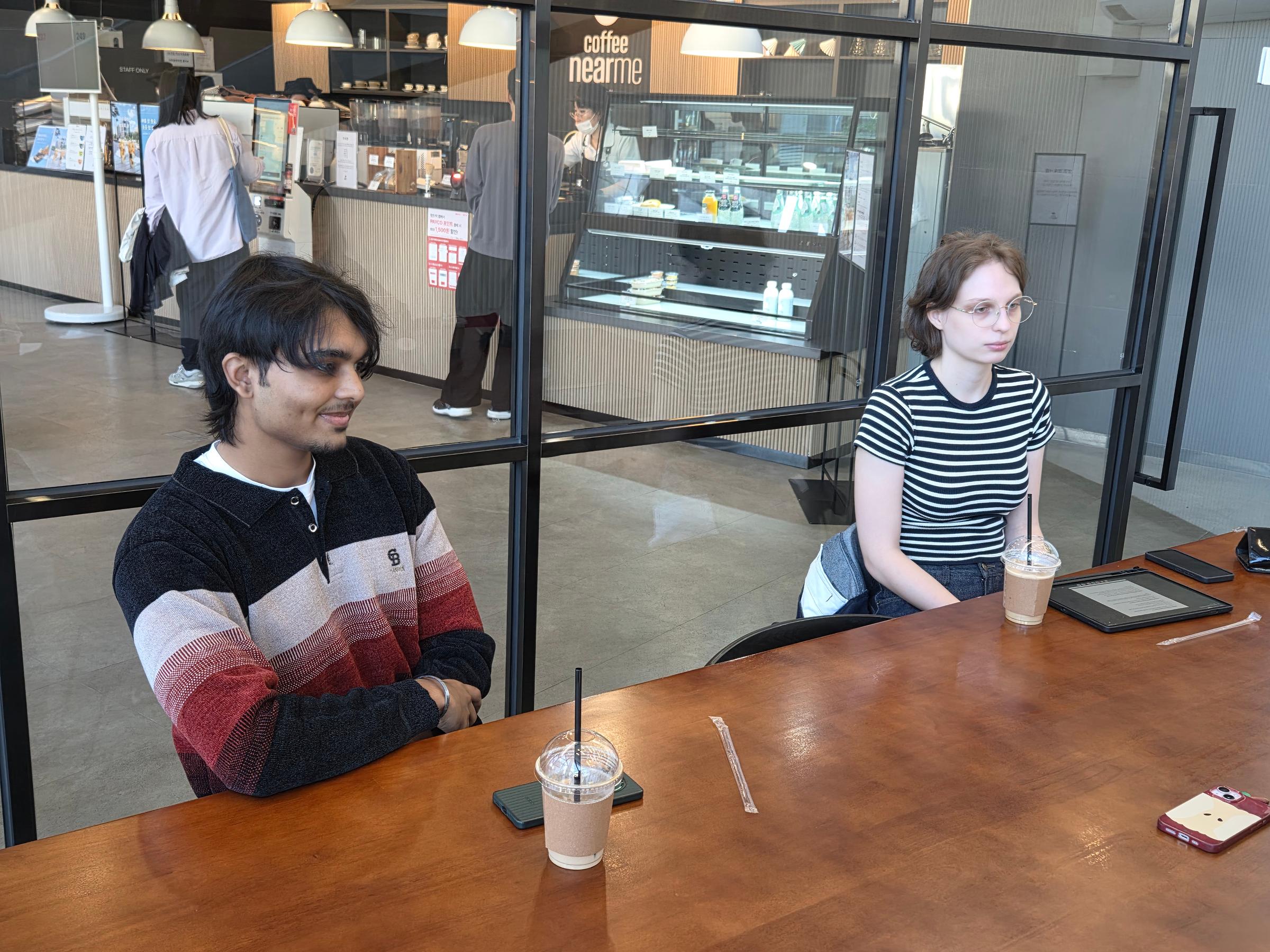
10월 2일 커피니어미 도서관점에서 만난 파르딘(왼쪽)과 예카테리나(오른쪽)
Part 1. '처음'이라는 이름으로
Q1. 한국, 그 중에서도 포항에 있는 POSTECH을 처음 알게 된 계기는 무엇인가요? 다른 나라의 대학도 선택지였을 텐데, 결국 POSTECH을 고른 이유가 궁금합니다.
예카테리나 | 한국 유학을 고민하면서 GKS(정부초청 외국인 장학생, Global Korea Scholarship)를 알아보다가 POSTECH을 처음 알게 됐어요. 포항은 서울이나 부산보다 작은 도시지만, 바다가 바로 옆에 있잖아요. 학교 규모가 작고 공동체가 끈끈하다는 점도 좋았어요. 제가 다닌 고등학교와 정말 비슷한 분위기였거든요. 바다가 가깝고 초록색이 가득한 캠퍼스도 마음에 들었고요.
파르딘 | 저는 기계공학과 김진태 교수님의 유튜브 채널을 통해 POSTECH을 처음 알게 되었어요. 학생들이 동아리를 만들고 싶다고 하자 학교가 선뜻 동아리 공간을 마련해 줬다는 이야기를 들었는데, 그게 정말 인상 깊었어요. 학생이 무언가를 시작하려고 할 때 학교가 그걸 진지하게 받아준다는 뜻이잖아요. 그때부터 POSTECH을 본격적으로 알아보기 시작했습니다.
Q2. 두 분은 POSTECH 40년 역사상 첫 외국인 학부생 19명에 속합니다. 소감을 여쭤보고 싶어요.
파르딘 | 우리가 처음 길을 여는 개척자라는 뜻이잖아요. 사실 그게 제가 POSTECH에 온 이유 중 하나예요. 뒤에 올 학생들을 위해 이곳에 무언가를 만들고 싶었고, 캠퍼스에서 처음으로 일어나는 일에 함께하고 싶었어요. 저에게 정말 큰 경험이 될 거라고 생각합니다.
예카테리나 | 처음이라서 생기는 어려움도 분명 있을 거예요. 그래도 저는 그게 좋아요. 우리가 직접 길을 찾아 나갈 수 있고, 나중에 올 외국인 학생들에게 도움이 될 수도 있으니까요. 첫 번째라는 사실이 꽤 특별하게 느껴져요.
Q3. 그렇다면 '첫 번째'라서 어려운 점도 있을까요?
파르딘 | 한 번도 와 본 적 없는, 완전히 다른 나라에서 모든 걸 처음부터 헤쳐 나가야 한다는 게 가장 어려워요. 방글라데시에서는 스무 명 가까이 되는 친구들과 어울려 다녔어요. 저는 사람들과 이야기하는 걸 정말 좋아하거든요. 그런데 여기서는 오른쪽에서는 한국어가, 왼쪽에서는 러시아어가 들려요. 외국인 학생 중에 러시아어권 친구들이 많거든요. 가끔은 '무슨 이야기를 하는 걸까' 하고 쳐다볼 때도 있어요. 그래도 한국은 살기에 무척 편리한 나라고, 저는 스스로를 믿는 편이라 잘 이겨낼 수 있을 거라고 생각해요.
예카테리나 | 저는 한국 학생들과 소통하는 게 가장 어려워요. 아직 강의실에서 외국인을 보는 게 익숙하지 않은 학생들도 있는 것 같거든요. 하지만 유학이란 원래 그런 거라고 생각해요. 먼저 다가가려고 노력해야죠.
파르딘 | 그것도 다 성장하는 과정의 일부고요.
Q4. 포항에 도착한 날부터 지금까지, 가장 기억에 남는 장면은 무엇인가요? 예상과 가장 달랐던 점도 궁금합니다.
파르딘 | 포항에 오기 전 이야기부터 해야 할 것 같아요. 부산에서 포항으로 오는 열차에서 짐을 어디에 둘지 몰라 헤매고 있었어요. 그때 전혀 모르는 한 여성분이, 아마 영어도 잘 모르셨던 것 같아요, 본인의 짐을 들어 올리며 어디에 넣는지 직접 보여주셨어요. 마침 제 자리가 그분 옆이었는데, 영어를 알아듣지 못하시면서도 계속 말을 건네며 저를 편안하게 대해주셨어요. 처음 보는 외국인에게도 이렇게 마음을 쓸 수 있구나, 하고 느꼈죠.
두 번째는 다른 외국인 학부생들과 함께 포항의 유명한 죽도시장에 갔던 날이에요. 시장에서 직접 해산물을 사고, RC 기숙사 공용 주방에 모여 함께 요리하고 저녁을 먹었어요. 다 같이 장을 보고 음식을 만들어 나눠 먹는 과정 자체가 정말 즐거웠고, 낯선 곳에서 만난 친구들과 함께 특별한 추억을 만들 수 있었어요. 저뿐만 아니라 함께한 친구들 모두에게 오래 기억에 남을 경험이었던 것 같아요.
예카테리나 | 저는 포항이라는 도시 자체가 정말 놀라워요. 러시아에서는 인구 50만 명 정도의 도시라고 하면 훨씬 작은 곳을 떠올리거든요. 포항도 그럴 거라 생각했는데, 버스터미널에서 기숙사까지 택시를 타고 오는데 창밖에 예쁜 집과 아파트가 이어지고 어디를 봐도 초록빛이었어요. 새도 있고, 연못도 있고요. 상상했던 것과 정말 달라서, 여기 있는 게 너무 좋았어요. 음식은 아직 적응 중이지만, 새로운 걸 계속 시도해 보고 있어요. 곧 익숙해질 거라고 믿어요.
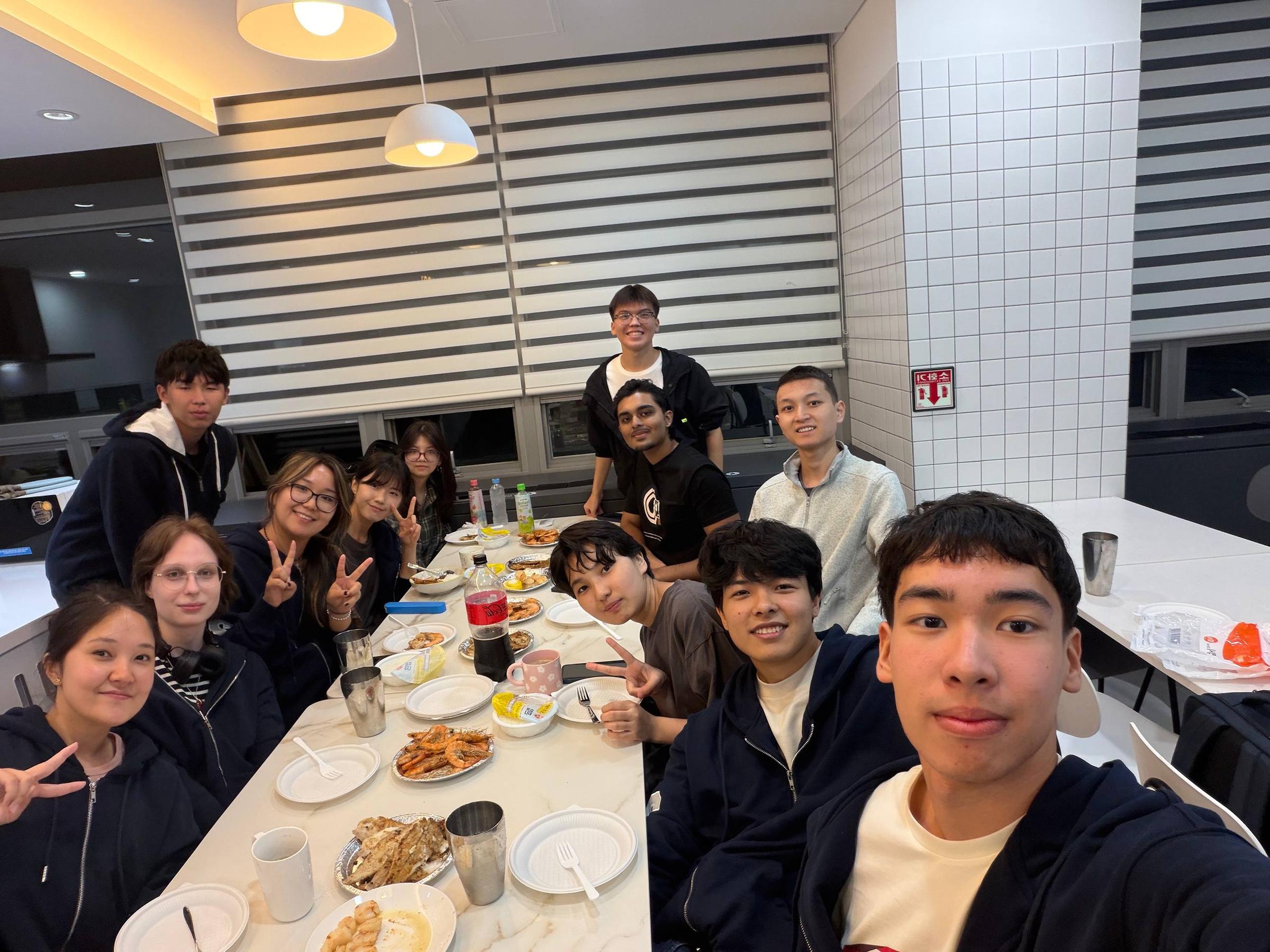
[사진] 파르딘이 포항에서 가장 기억에 남는 장면: 친구들과 함께 요리를 해 먹었던 날
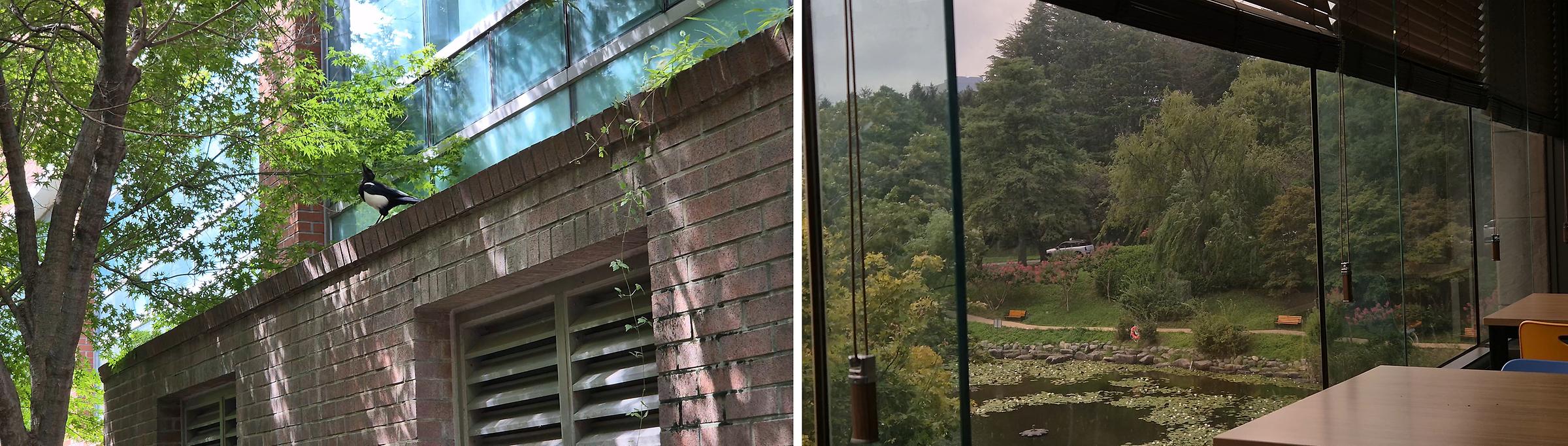
[사진] 포항의 초록을 좋아하는 예카테리나
Part 2. 예카테리나의 이야기 ㅡ 누구나 온전한 삶을 살 수 있도록
Q1. 러시아 최고 수준의 STEM 학교를 수석으로 졸업했어요. 그 곳에서의 공부는 어땠나요?
하루하루가 정말 숨 가쁘게 돌아갔어요. 수업은 다른 학교보다 훨씬 어려웠고, 쪽지시험도 계속 봤어요. 게다가 학교는 모스크바 북쪽에, 집은 남쪽에 있어서 매일 지하철을 한참 타야 했어요. 계절에 따라 하루에 세 시간 반에서 네 시간을 길에서 보낸 셈이죠.
그래도 그 학교가 정말 좋았어요. 뛰어난 친구들이 많았고, 모두가 서로를 알만큼 끈끈한 공동체였거든요. 사실 그게 제가 POSTECH을 고른 이유 중 하나예요. 분위기가 정말 많이 닮았어요. 다른 점이 있다면, 이제는 기숙사에 살고 있으니 매일 몇 시간씩 지하철을 탈 필요가 없어졌다는 거죠.
Q2. 과학과 공학에 처음 빠지게 된 순간이 있다면 언제였나요?
10학년 때 했던 파이썬 프로그래밍 프로젝트요. 게임을 만들거나 아예 새로운 프로그래밍 언어를 만드는 정도의 큰 과제였어요. 세세한 걸 하나하나 배우는 게 아니라 거대한 과제 하나만 덩그러니 주어졌고, 거의 모든 걸 스스로 해결해야 했어요. 시간도 노력도 엄청 들었죠.
그런데 마침내 과제를 끝내고 내가 만든 결과물이 실제로 작동하는 걸 봤을 때의 기분은 지금도 생생해요. 언젠가 누군가에게 도움이 될 수도 있는 무언가를 내 손으로 만들었다는 성취감이 정말 좋았어요. 그래서 사람을 돕고 있다는 걸 실감할 수 있는 분야인 생체의공학과 3D 바이오프린팅을 택하게 됐어요.
Q3. POSTECH에 오기 전, 러시아 국립원자력연구대학교(MEPhI)에서 메카트로닉스와 로보틱스를 전공했다고 들었어요. 그 곳에서는 어땠는지, 그리고 POSTECH으로 오기로 결심한 과정이 궁금합니다.
MEPhI는 러시아에서 손에 꼽히는 대학이에요. 그런데도 저는 여러 면에서 제약이 많다고 느꼈어요. 학부생이 연구실에 들어가는 건 거의 불가능했고, 연구실이 어떤 곳인지 경험해 보는 것조차 어려웠어요. 수강 과목도 고를 수 없어서, 제 목표와는 전혀 상관없는 과목을 들어야 할 때도 있었고요.
POSTECH은 달라요. 인문사회 과목처럼 꼭 들어야 하는 과목이 있어도, 그 안에서 선택할 수 있어요. 저는 국제적인 분위기에서 영어로 공부하고, 교환학생 같은 기회도 경험해 보고 싶었어요. 제가 듣기로 POSTECH은 거의 모든 학생이 해외 경험을 해본다고 하더라고요. 좋은 의미로 정말 놀라웠어요. 학생 수가 적으니까, 정말로 하고 싶은 걸 실제로 해볼 수 있는 거죠.
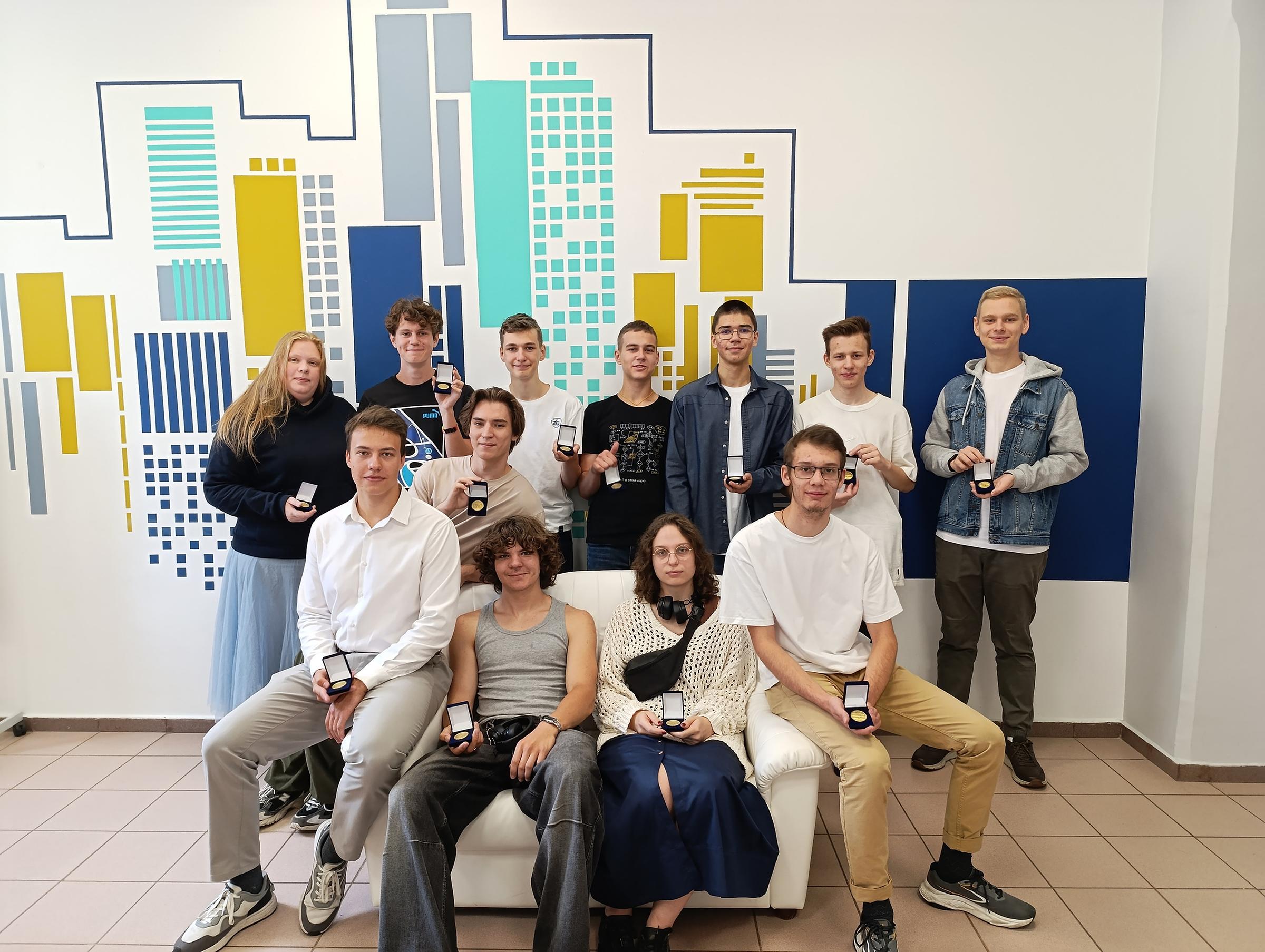
[사진] 예카테리나와 고등학교 친구들: 학교 졸업 시험에서 최소 한 과목 이상 100점을 맞은 학생들과 그 자리에 함께한 예카테리나
Q4. 사람을 돕는 보조/재활 기기를 만들고 싶다는 목표는 어디서 시작됐나요? 계기가 된 사람이나 경험이 있나요?
살면서 일상에 제약이 있는 사람들을 돕고 싶다고 느낀 순간이 여러 번 있었어요. 학교에 들어가기도 전, 아주 어렸을 때 친구 중에 한쪽 팔이 없는 남자아이가 있었어요. 간단한 의수를 하고 있었는데, 다른 아이들은 의수를 낯설어하거나 무서워해서 그 아이와 잘 어울리지 못했어요. 저는 그때 그 아이를 돕고 싶다는 마음이 들었어요.
어린 시절 내내 가장 좋아했던 영화는 <돌핀 테일(Dolphin Tale)>이었어요. 꼬리를 잃은 돌고래가 주인공들이 만들어 준 인공 꼬리를 달고 다시 헤엄치게 되는 이야기예요. 그리고 저희 아버지가 청력이 좋지 않으시거든요.
의수를 한 그 친구도, 영화 속 돌고래도, 그리고 아버지도요. 누군가는 당연하게 누리는 일상을 누군가는 누리지 못한다는 게 늘 불공평하다고 느꼈어요. 그래서 기술로 그 차이를 줄이는 데 힘을 보태고 싶어요.
Q5. POSTECH에서 꼭 해 보고 싶은 연구나 함께하고 싶은 연구실이 있나요?
이미 기계공학과 장진아 교수님 연구실의 새내기 연구참여 프로그램에 들어갔어요. 아직 대단한 걸 하는 건 아니에요. 지금은 교수님 조언에 따라, 연구 주제를 더 잘 이해하기 위해 관련 논문을 읽고 있어요.
교수님 연구는 POSTECH에 오기 전부터 관심 있게 지켜봤어요. 사실 저는 올해 3월에 무릎 수술을 받았어요. 반월상연골(무릎 관절 사이에서 충격을 흡수하는 연골)의 일부를 잘라냈죠. 그 뒤로 반월상연골이 저의 새로운 관심사가 됐어요. 교수님 연구실이 반월상연골을 직접 다루는 건 아니지만, 교수님이 연구하시는 혈관화(vascularization, 인공 조직 안에서 혈관이 자라게 하는 기술)를 배우면서 제 관심 분야와 이어지는 무언가를 찾고 싶어요. 언젠가는 3D 프린팅으로 직접 무언가를 만들어 보고 싶고요.
Part 3. 파르딘의 이야기 ㅡ 밤하늘에서 우주공학으로
Q1. 망원경의 한계를 넘으려고 적도의식 추적 플랫폼(equatorial tracking platform)을 직접 만들었어요. 어떤 문제에서 출발했고, 어떻게 만들었나요?
해가 동쪽에서 서쪽으로 움직일 때 똑바로 가지 않고 비스듬히 가잖아요. 지구의 자전축이 북극성을 향하고 있어서, 밤하늘의 별과 행성, 달, 은하가 모두 북극성을 중심으로 도는 것처럼 보이거든요.
맨눈으로 보면 별은 아주 천천히 움직이는 것 같아요. 그런데 망원경으로 200배, 240배까지 확대하면 이야기가 달라져요. 별이 20~30초 만에 시야 밖으로 흘러가 버리거든요.
그래서 그 움직임을 거꾸로 상쇄하는 장치를 만들었어요. 방글라데시는 위도가 약 23도인데, 위도는 곧 지평선에서 북극성까지의 각도예요. 그 각도를 계산해 플랫폼의 회전축이 북극성과 일직선이 되도록 맞추고, 남쪽과 북쪽에 베어링을 달았어요. 지구가 도는 방향과 반대로 플랫폼이 천천히 도는 거죠. 덕분에 5분에서 10분 정도 별을 망원경 시야 한가운데에 붙잡아 둘 수 있게 됐어요. 그때부터 토성, 목성 같은 행성과 오리온 성운도 찍기 시작했고요.
사실 제작할 때 선배들의 도움을 많이 받았어요. 제가 온라인에서 찾은 논문과 영상을 보여주면, 원리를 이해한 선배들이 함께 만들어 줬죠.
Q2. 직접 찍은 토성 사진이 NASA Exoplanet Watch의 2024년 4월 '이달의 천체사진(Astrophoto of the Month)'에 실렸어요. 어땠나요?
믿기지 않았어요. NASA Exoplanet Watch는 외계행성을 관측하는 프로그램인데, 참여자들이 천체 사진을 올리는 별도의 채널이 있었어요. 매달 그중 몇 장을 골라 뉴스레터에 '이달의 사진'으로 싣는 거예요.
어느 날 칼텍(Caltech)에서 공부하는 담당자분께 연락이 왔어요. 제 사진을 뉴스레터에 실어도 괜찮겠냐고요. 당연히 괜찮다고 하면서, 어떤 뉴스레터인지 다시 물어봤어요. 그런데 NASA Exoplanet Watch 뉴스레터라는 거예요. 그래서 그 자리에서 바로 엄마한테 전화해서 자랑했어요.
기술적으로 저보다 훨씬 좋은 사진도 분명 많았을 거예요. 그런데도 저를 골라준 건, 제가 들인 노력과 그 사진에 담긴 이야기 때문이라고 생각해요. 그동안 애쓴 노력과 시간이 결실을 맺었다는 게 정말 기뻤어요.
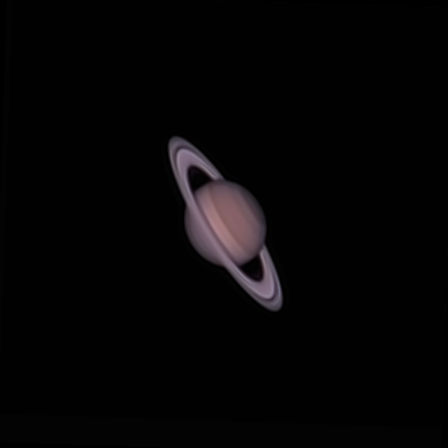
[사진] 파르딘이 직접 촬영한 토성 사진(NASA Exoplanet Watch 2024년 4월 '이달의 천체사진')
Q3. 밤하늘을 처음 좋아하게 된 계기는 무엇인가요?
정확히 어떤 순간이었는지는 기억나지 않아요. 다만 어릴 때부터 늘 별을 올려다봤어요. 그때는 지금보다 하늘이 훨씬 어두웠거든요. 걸어가면 달이나 해가 나를 따라오는 것처럼 보이는 착시 있잖아요. 그런데 별은 왜 나를 따라오지 않을까, 그런 게 궁금했어요. 그 호기심이 밤하늘뿐 아니라 낮의 하늘, 그리고 천문학과 항공우주 전반에 대한 관심으로 커졌어요. 포항은 공기가 맑아서, 밤하늘의 별을 훨씬 많이 볼 수 있을 것 같아 기대돼요.
Q4. Eureka Fest 2023에서 태양 추적 장치, 압전 도로, 전기차 무선 충전을 하나로 합친 도시 모델 'Tesla's City'를 선보였어요. 이 아이디어는 어떻게 나왔나요?
팀 주제가 재생에너지였는데, 처음엔 떠오르는 아이디어를 무작정 적어 내려갔어요. 누군가 태양 추적 장치를 만들자고 했는데, 그건 제 적도의 플랫폼에서 나온 아이디어였어요. 제 플랫폼이 별을 따라가듯, 해를 따라 움직이는 태양광 패널을 만들면 효율을 높일 수 있으니까요. 장치를 그대로 쓴 건 아니고, '천체를 추적한다'는 원리를 가져온 거예요.
또 다른 친구는 당시 SNS에서 화제였던 '일본은 사람들의 발걸음을 전기로 바꾸고 있다'는 게시물을 보고, 걸으면 전기가 만들어지는 길을 제안했어요. 물리 시간에 배운 개념에서 출발해, 달리는 전기차를 도로가 자동으로 충전해 주는 아이디어도 나왔고요.
다들 그중 하나를 고르려던 참이었는데, 저는 이걸 다 합치자고 했어요. 더 효율적인 태양광 패널, 전기차를 충전해 주는 도로, 발걸음을 전기로 바꾸는 보도까지, 모든 게 들어 있는 하나의 도시를 만들면 어떨까 하고요.
Q5. 방글라데시 A Level 물리 최고점을 받을 만큼 물리를 좋아하고 천문학에도 깊은 관심이 있는데, 기계공학을 택했어요. 이 관심사들이 어떻게 하나로 이어지나요? 그리고 어떤 엔지니어가 되고 싶나요?
저는 천문학을 정말 좋아해요. 그런데 저는 좋아하는 데서 그치지 않고, 이 분야에 실제로 보탬이 되는 무언가를 만들고 싶어요. 허블 우주망원경이나 제임스 웹 우주망원경처럼 더 먼 은하를 찍을 수 있게 해주는 도구요. 별을 찍고 이론을 배우는 것만으로는 그런 걸 만들 수 없어요. 그걸 실제로 우주로 보내려면 공학이 필요하죠. 적도의 플랫폼을 만들고 나서 깨달았어요. 공학을 제대로 배우면 제 취미뿐 아니라 훨씬 많은 것을 바꿀 수 있겠다고요.
POSTECH에는 항공우주공학과가 따로 없지만, 기계공학과에서 관련 과목을 들으며 항공우주를 전문 분야로 삼을 수 있어요. 기계공학은 정말 활용 범위가 넓어요. 바닷속 잠수함이든, 도로 위 자동차든, 우주선이든 기계공학이 안 들어가는 곳이 없죠. 그래서 학부에서는 시야를 넓게 열어 두고, 석·박사 과정에서 더 전문적인 분야로 좁혀 가려고 해요. 그리고 언젠가는 방글라데시와 POSTECH을 함께 대표할 수 있는 글로벌 인재가 되고 싶습니다.
Part 4. 그리고, 다음 20년
Q1. 이제 막 POSTECH에서의 첫 학기를 시작했어요. 어떤 점이 가장 기대되나요?
파르딘 | 우선 공부에서는 물리를 더 잘하고 싶어요. 여기서 배우는 방식이 제가 해왔던 것과 많이 달라서, 지금은 물리에 더 집중하고 있어요. 예전에 O Level에서 A Level로 넘어갈 때도 처음엔 쉽지 않았지만, 꾸준히 공부하면서 실력을 키웠어요. 이번에도 계속 공부하면서 한 걸음씩 발전하고 싶어요.
그리고 기계공학과 항공우주연구회 PSI(POSTECH aeroSpace Initiatives)에 들어갔어요. 지금까지는 주로 천문 쪽을 다뤘고, 제대로 공학을 해 본 건 적도의 플랫폼을 만들 때뿐이었어요. 이제는 프로그래밍과 CAD를 스스로 익힐 차례예요. 그리고, 선배들과 GA(Global Student Advisor, 외국인 학부 신입생을 위한 재학생 전담 멘토)들이 방학 때 바닷가에서 밤을 새우며 놀았던 사진을 보여준 적이 있는데, 저도 친구들과 그런 추억을 만들고 싶어요.
예카테리나 | 한국인 친구를 사귀고 싶어요. 최소 4년은 여기서 지낼 테니까요. 한국어는 벌써 1년 반 정도 공부했고, 다음 학기에는 PICL(언어문화원) 한국어 과정에도 들어가고 싶어요.
파르딘 | 예카테리나는 한국어를 벌써 정말 잘해요. 외국인 친구들끼리 죽도시장에 해산물을 먹으러 갔을 때, 예카테리나가 한국 분들과 이야기하면서 저희를 전부 이끌고 다녔어요.
예카테리나 | 한국어 잘 못해요 (한국어로 말함). 지금은 캠퍼스 생활에 적응하는 것이 먼저라고 생각해서, 동아리는 다음 학기에 들어가보려고요. 사진, 댄스, 비즈니스 동아리처럼 좋은 선택지가 정말 많더라고요. 그리고 저는 서핑을 정말 좋아해요. 지금까지는 러시아에서만 타 봤는데, 무릎이 회복되면 포항 바다에서도 꼭 타 보고 싶어요.
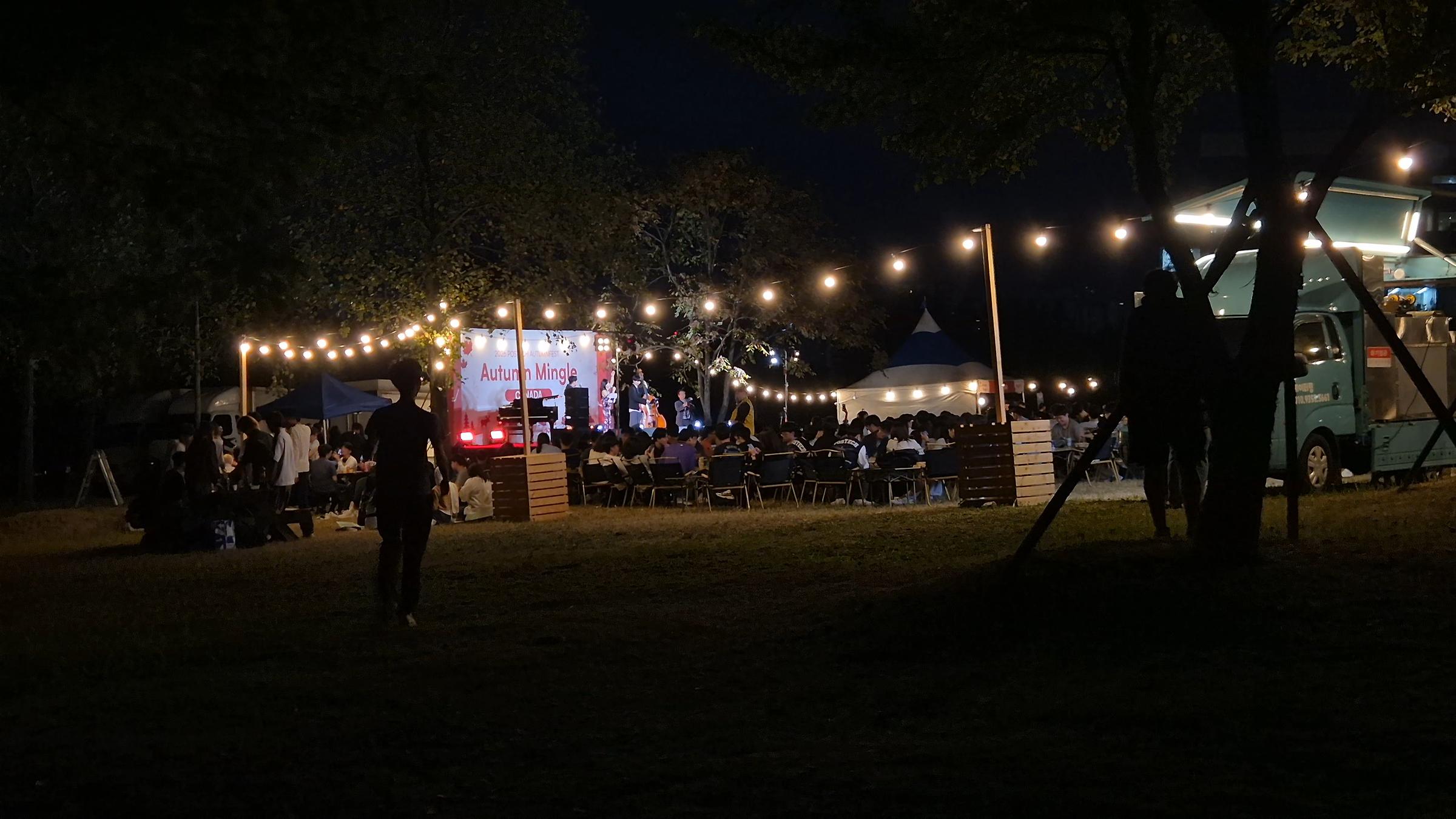
[사진] 예카테리나가 촬영한 2026 PAF 풍경
Q2. POSTECH은 '가치창출대학'입니다. 두 사람에게 '가치를 만든다'는 것은 무엇인가요?
파르딘 | POSTECH에서 새롭게 만드는 가치를 어디서나 느낄 수 있어요. 앞서 말한 것처럼 학생 몇 명이 동아리를 만들고 싶다고 하자 학교가 공간을 새로 꾸며 주었잖아요. 가속기처럼 학생에게 열려 있는 연구 인프라도 정말 많고요. 선배들에게 들어 보니 방학 동안 원하는 연구에 참여할 수 있고, 교수님들도 언제든 찾아가면 반겨주신대요. 학부생이 연구실 자리를 얻으려고 치열하게 경쟁해야 하는 대학도 많은데, 여기선 그렇지 않아요. 제 진로와 관련된 거라면 무엇이든 해 볼 수 있고, POSTECH은 늘 그걸 도와줄 거예요. 저에게는 그게 바로 POSTECH의 가치예요.
예카테리나 | 저에게 가치 창출은 연구와 맞닿아 있어요. 저는 합격하기도 전부터 교수님께 연락드렸고, 학부생 연구참여 프로그램에도 지원했어요. 학부생 때부터 연구실을 경험할 수 있다는 건 정말 값진 일이에요. 여기엔 기회가 정말 많아요. 그걸 잘 활용하기만 하면 돼요.
Q3. POSTECH 구성원들에게 하고 싶은 말이 있나요?
예카테리나 | 무엇보다 저를 받아준 POSTECH에 감사하다고 말하고 싶어요. 장학금을 받으며 한국의 훌륭한 대학에서 공부할 수 있다는 건 저에게 정말 큰 기회예요. 학교가 영어 강의를 늘리고, 외국인 학생들이 한국 학생들과 여러 활동을 함께할 수 있도록 애쓰는 게 느껴져요. 모스크바에서 다른 대학 두 곳을 경험해 봤는데, 거기선 모든 걸 혼자 알아내야 했어요. 여기는 GA와 선생님들을 비롯해 도움을 청할 수 있는 사람이 정말 많아요.
파르딘 | 입학팀과 GA 여러분께 정말 감사드려요. 한 번도 마다하지 않고 도와주셨어요. 작은 제안을 하나 드리자면, 외국인 학생을 위한 짧은PDF나 영상 가이드가 있으면 좋겠어요. 기숙사 세탁기 쓰는 법이나 유심 개통처럼 아주 사소하지만 낯선 것들이요. 저를 포함해 아직 미성년자인 친구들은 휴대폰 개통 절차가 더 까다로운데, 휴대폰이 eSIM을 지원하지 않거나, 외국인등록증으로 개통할 수 없는 유심을 샀다가 다시 구입해야 했던 친구도 있었거든요. GA들도 학생이라 늘 바로 도와줄 수는 없으니, 이런 가이드가 있으면 스스로 해결할 수 있을 거예요.
Q4. 지금 두 번째 외국인 학부생 모집이 진행 중입니다. POSTECH이나 한국 유학을 고민하는 학생들에게 조언을 한다면요?
예카테리나 | 조금이라도 한국어를 배우고 오면 정말 도움이 돼요. 저도 아직 한국어를 잘하는 건 아니지만, 얼마 전에 아팠을 때 혼자 동네 병원에 가서 증상을 설명할 수 있었어요. 그리고 학교 홈페이지를 꼭 찾아보세요. 저는 지원자 150명 정도가 모인 텔레그램 단체방을 관리하고 있는데, 장학금 같은 질문이 정말 많이 올라와요. 대부분 홈페이지에 이미 나와 있는 내용이에요.
파르딘 | 저도 한국어를 미리 배워 올 걸 그랬어요. 그리고 한국 학생들이 수학과 물리를 어떻게 공부하는지 미리 알아 두면 좋아요. 영국식 A Level은 공식을 외워 값을 대입하는 방식이 많은데, 여기는 전혀 달라요. 한국 고등학교, 특히 과학고에서 어떻게 가르치는지 조금이라도 공부해 오면 훨씬 쉽게 따라갈 수 있을 거예요.
예카테리나 | 수업 시간은 모스크바보다 적은 대신, 스스로 공부해야 하는 양이 많아요. 저는 지금 그게 즐거워요. 제가 하는 공부에 진짜 관심이 있으니까요.
Q5. 마지막 질문입니다. 20년 뒤, POSTECH 개교 60주년에 모교를 다시 찾는다면 어떤 사람이 되어 있고 싶나요?
예카테리나 | 딥테크 사업을 하고 싶어요. 지금 제 꿈은 의수, 의족이나 인공 장기를 만들어 사람들을 돕는 거예요. 물론 부자도 되고 싶고요. 한국이나 호주처럼 다른 나라에서 일하며 살고 있으면 좋겠어요.
파르딘 | 항공우주 분야의 전문 연구자가 되어, 제가 몸담은 분야에서 리더가 되고 싶어요. 그리고 다시 POSTECH에 왔을 때, 후배들이 저를 그저 '찾아온 선배'로만 아는 게 아니라 POSTECH의 이야기 속 한 사람으로 저를 알고 있었으면 좋겠어요. 첫 외국인 학부생으로서, 연구자로서, 그리고 한 명의 포스테키안으로서 뒤에 올 학생들을 위해 멋진 무언가를 해냈다는 이야기로요.
20년 뒤, 두 사람은 어떤 모습으로 POSTECH을 다시 찾게 될까? 예카테리나는 사람들에게 도움이 되는 기술을 만드는 사업가를, 파르딘은 항공우주 분야의 연구자로 성장해 후배들에게 무언가를 남길 수 있는 선배를 꿈꾼다. 서로 그리는 미래는 다르지만, 자신이 좋아하는 일을 통해 의미 있는 무언가를 만들어 가고 싶다는 마음만큼은 닮아 있었다.
물론 지금은 그 미래를 향한 첫걸음을 막 내디딘 참이다. 새로운 수업 방식에 적응하고, 친구를 사귀고, 낯선 일상을 하나씩 익혀 가는 중이다. 두 사람이 앞으로 POSTECH에서 어떤 시간을 보내고, 어떤 이야기를 만들어 갈지 기대된다.
“I Want to Build Something Here for the Students Who Will Come After Us”
— From Moscow and Dhaka to Pohang: Ekaterina and Fardin on Their Opening Semester as POSTECH’s First International Undergraduates
Written by | POSTECH Creators Emily Chi (Industrial and Management Engineering, entered 2024)
This fall, POSTECH welcomed a special group of freshmen: 19 international undergraduate students, the first in the university’s 40-year history. Among them are Ekaterina Paramonova from Moscow, Russia, and S M Fardin Bin Mosabbir from Dhaka, Bangladesh.
Ekaterina hopes to make everyday life easier for others through technology, while Fardin wants to turn his childhood fascination with the night sky into a career in engineering. Coming from different parts of the world, they arrived in Pohang with dreams of their own. As they navigate their first semester on a still-unfamiliar campus, we sat down with them to talk about why they chose POSTECH, what their experiences have been like so far, and what they hope to achieve in the years ahead.
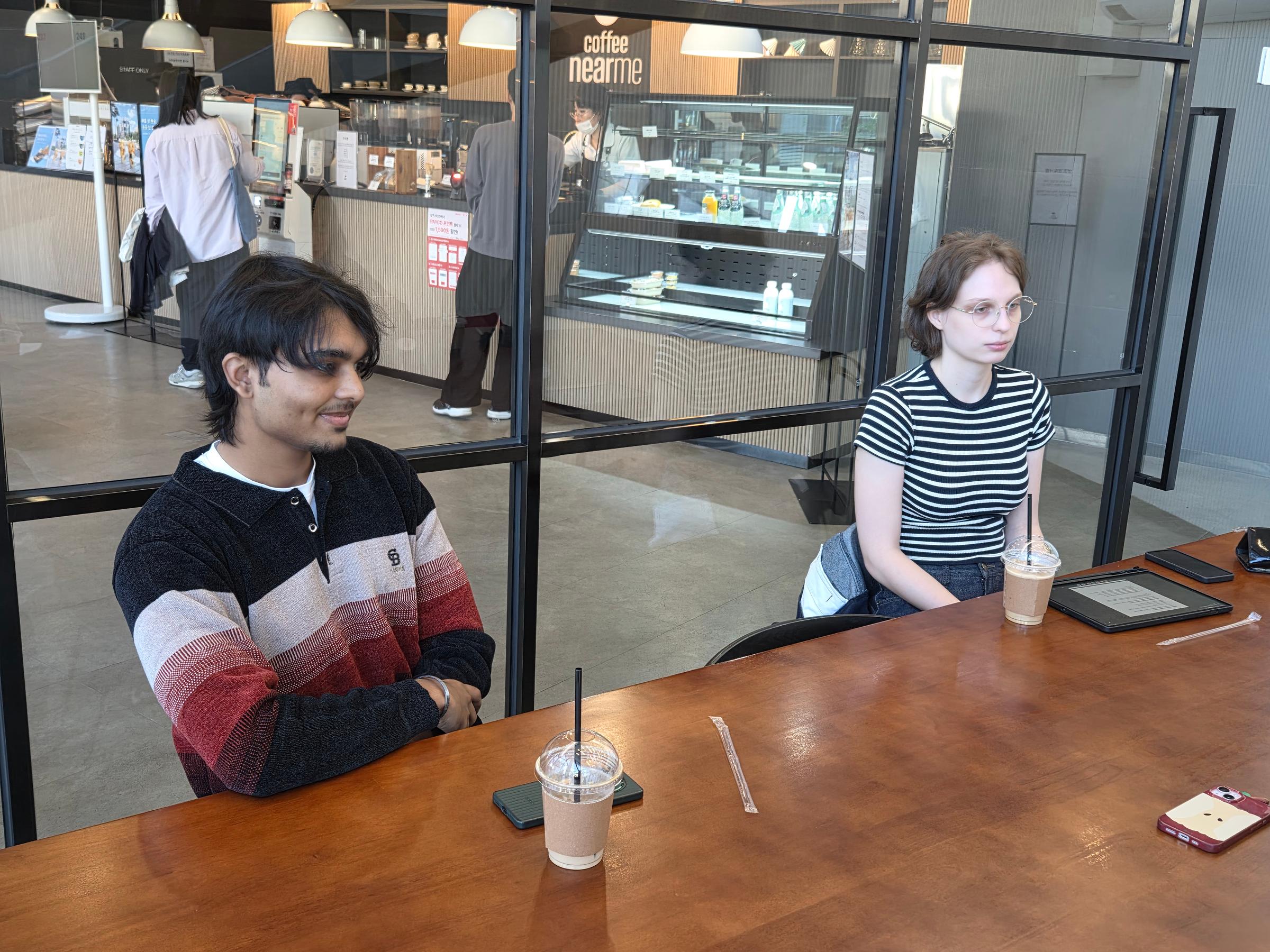 Fardin (left) and Ekaterina (right) at Coffee Near Me in thelibrary on Oct. 2
Part 1. Being the First
Q1. How did you first hear about POSTECH in Pohang, South Korea? You must have considered universities in other countries as well. What ultimately made you choose POSTECH?
Ekaterina | I first came across POSTECH while looking into the Global Korea Scholarship (GKS) as I considered studying in Korea. Pohang is smaller than Seoul or Busan, but it’s right by the sea. I also liked the university’s small size and close-knit community. It reminded me so much of my high school. The greenery around campus and thecoastal setting appealed to me, too.
Fardin | I first learned about POSTECH through the YouTube channel of Professor Jin Tae Kim from the Department of Mechanical Engineering. I heard a story about students who wanted to start a club, and the university readily provided them with a space. That really impressed me. It showed that when students want to start something, the university takes their ideas seriously. That was when I started looking into POSTECH in earnest.
Q2. You are among the first 19 international undergraduates in POSTECH’s 40-year history. How does that feel?
Fardin | It means we are pioneers, the ones paving the way. To be honest, that’s one of the reasons I came to POSTECH. I wanted to build something here for the students who will come after us, and I wanted to be part of things happening on campus for the very first time. I think it will be an incredibly meaningful experience for me.
Ekaterina | There will definitely be challenges that come with being the first. But I actually like that. We get to find our own way, and what we learn might help future international students. Being the first feels pretty special.
Q3. Does being “the first” also come with any particular difficulties?
Fardin | The hardest part is having to figure everything out from scratch in a completely different country, somewhere I’ve never been before. Back in Bangladesh, I used to hang out with a group of nearly 20 friends. I really love talking to people. Here, though, I hear Korean on one side and Russian on the other. Quite a few of the international students speak Russian. Sometimes I catch myself looking over and wondering, “What are they talking about?” Still, Korea is an incredibly convenient place to live, and I believe in myself. I think I’ll be able to get through it.
Ekaterina | For me, the hardest part is communicating with Korean students. I think some students still aren’t used to seeing international students in their classrooms. But I think that’s part of studying abroad. I just need to make an effort to reach out first.
Fardin | And that’s all part of growing, too.
Q4. From the day you arrived in Pohang until now, what moments have stayed with you the most? Was anything different from what you expected?
Fardin | I think I should start with something that happened before I even got to Pohang. On the train from Busan, I was struggling to figure out where to put my luggage. A woman I had never met, who I don’t think spoke much English, lifted her own bag to show me where it should go. My seat happened to be next to hers. Even though we barely shared a language, she kept talking to me and made me feel comfortable. It struck me that someone could be so thoughtful toward a complete stranger from another country.
Another moment that stayed with mewas when I visited Pohang’s famous Jukdo Market with other international undergraduate students. We bought fresh seafood at the market, then gathered in the kitchen of the RC(Residential College) dormitory to cook and have dinner together. The whole experience of shopping for ingredients, cooking, and sharing a meal was really enjoyable. It was a special opportunity to make memories with friends I had met in a new place, and I think we’ll all remember it for a long time.
Ekaterina | I’m honestly amazed by Pohang itself. In Russia, when you hear about a city with a population of around 500,000, you imagine somewhere much smaller. I thought Pohang would be like that, too. But on the taxi ride from the bus terminal to my dorm, I saw lovely houses and apartment buildings, and greenery everywhere. There were birds and ponds, too. It was so different from what I had imagined, and I’m really happy to be here. I’m still getting used to the food, but I keep trying new things. I’m sure it’ll grow on me.
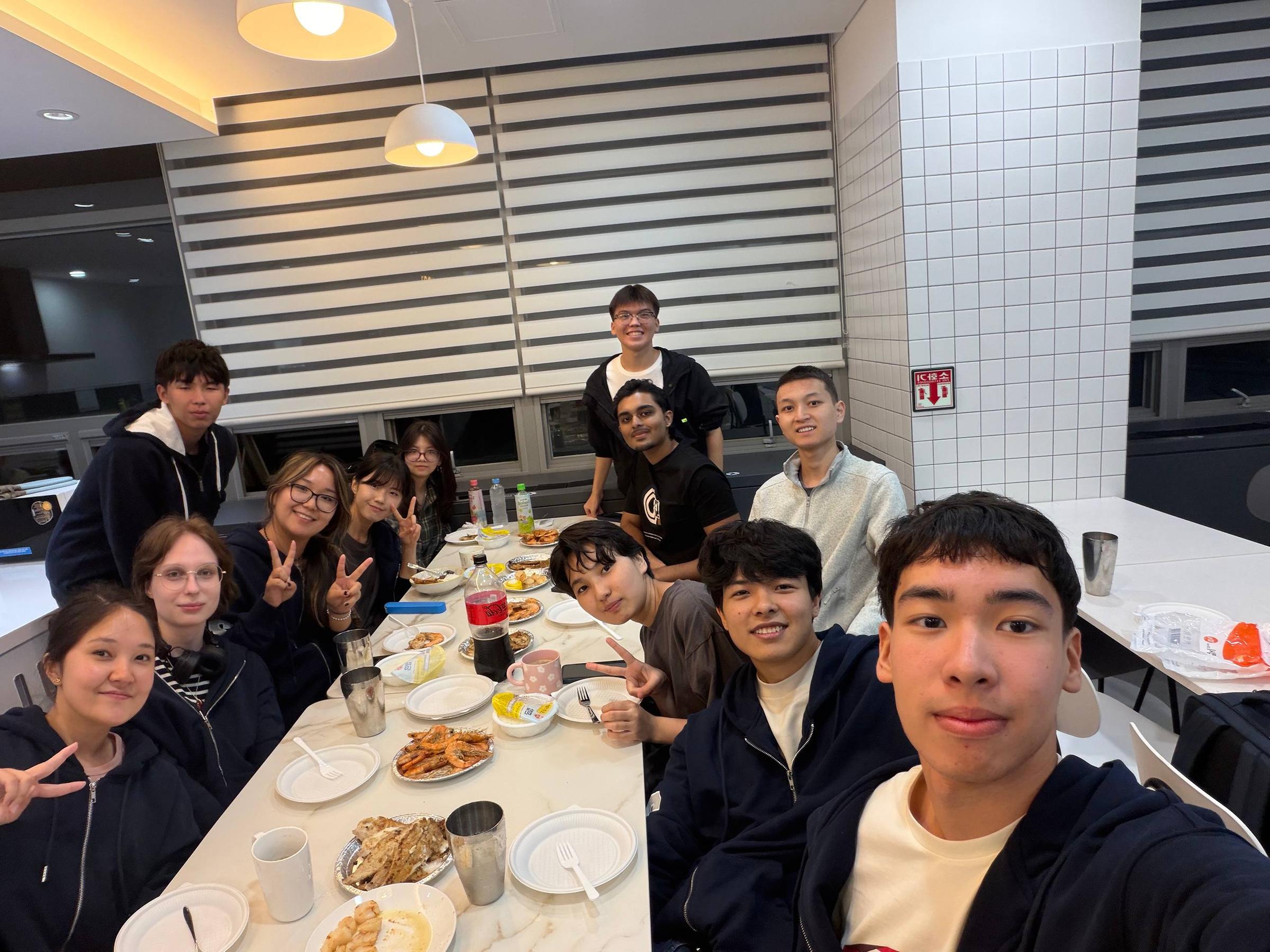
[Photo] One of Fardin’s most memorable moments in Pohang: cooking and sharing a meal with friends
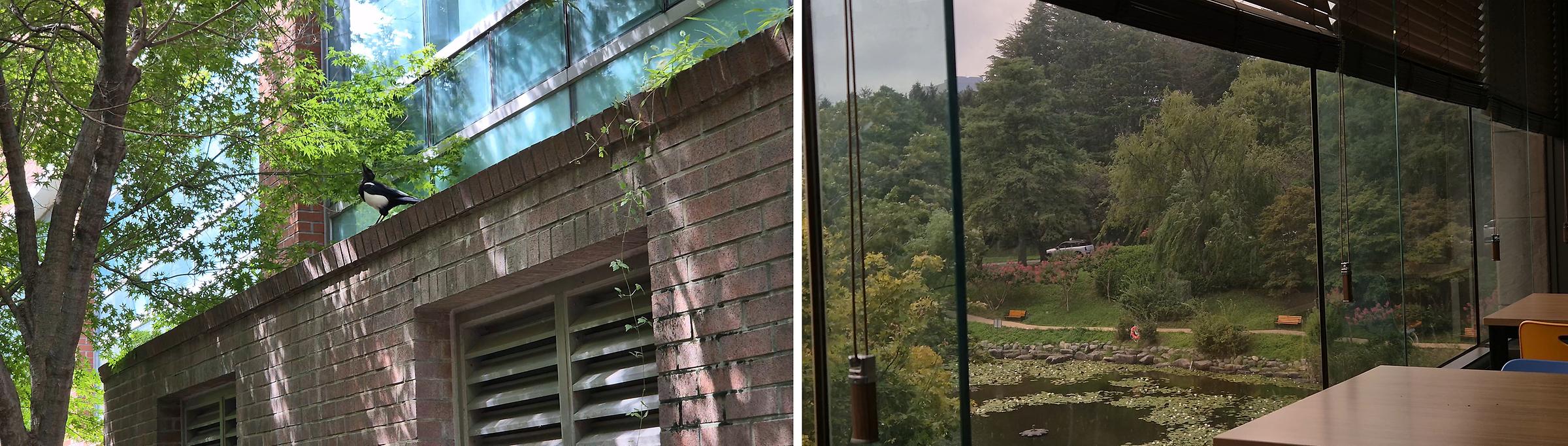
[Photo] Ekaterina, who loves the greenery of Pohang
Part 2. Ekaterina’s Story — Helping Everyone Live Life to the Fullest
Q1. You graduated at the top of your class from one of Russia’s leading STEM schools. What was studying there like?
Every day was incredibly busy. Classes were much harder than at other schools, and we had quizzes all the time. On top of that, my school was in northern Moscow and I lived in the south, so I spent a long time on the subway every day. Depending on the season, I was commuting for three and a half to four hours a day.
Even so, I really loved that school. I had so many talented classmates, and it was such a close-knit community that everyone knew each other. In fact, that’s one of the reasons I chose POSTECH. The atmosphere is very similar. The big difference is that now I live in a dorm, so I no longer have to spend hours on the subway every day.
Q2. Do you remember when you first became passionate aboutscience and engineering?
It was a Python programming project I did in tenth grade. It was a huge assignment, the kind where you had to create a game or even invent an entirely new programming language. Instead of teaching us every little step, our teachers just gave us one enormous task, and we had to figure almost everything out for ourselves. It took an incredible amount of time and effort.
But I still vividly remember how it felt when I finally finished and saw something I had created actually work. I loved the sense of accomplishment that came from building something with my own hands, something that might one day help someone else. That’s what led me to biomedical engineering and 3D bioprinting, fields where I could really feel that I was helping people.
Q3. Before coming to POSTECH, you studied mechatronics and robotics at the National Research Nuclear University MEPhI in Russia. What was that experience like, and how did you decide to come to POSTECH?
MEPhI is one of Russia’s top universities. Even so, I felt restricted in a lot of ways. It was almost impossible for undergraduates to join a research lab, or even get a sense of what working in one was like. I couldn’t choose my courses, either, so sometimes I had to take classes that had nothing to do with my goals.
POSTECH is different. Even when there are required subjects, like humanities and social sciences, you still have options within those areas. I wanted to study in English in an international environment and have opportunities such as going on exchange programs. I’d heard that nearly every POSTECH student gets some kind of international experience. That surprised me in the best possible way. Because the student body is small, you can actually pursue the things you really want to do.
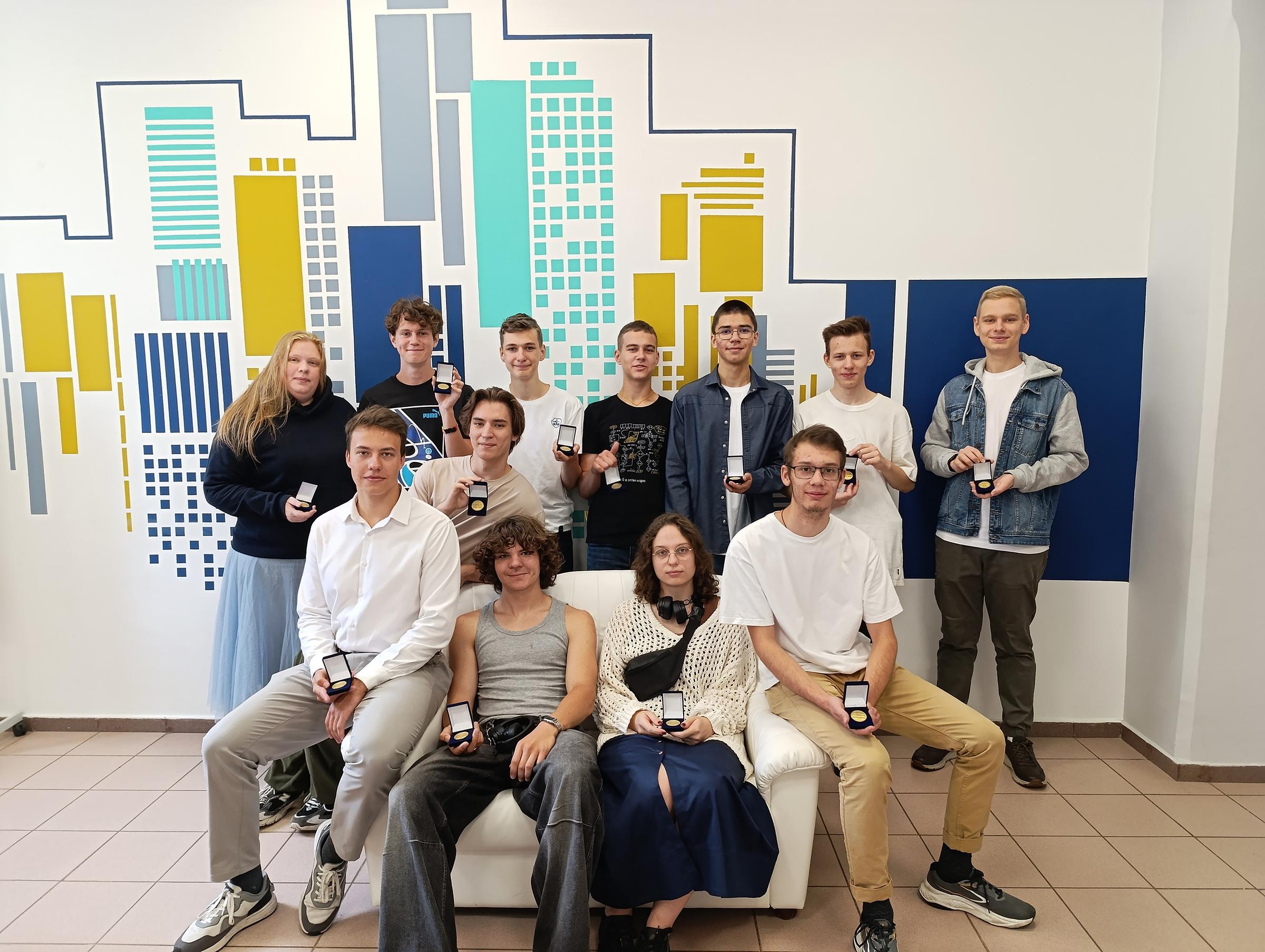
[Photo] Ekaterina with high school classmates who, like her, earned a perfect score on at least one of their graduation exams
Q4. Where did your goal of developing assistive and rehabilitation devices begin? Was there a particular person or experience that inspired you?
There have been several moments in my life when I’ve wanted to help people who face limitations in their everyday lives. When I was very young, before I even started school, I had a friend, a little boy who had only one arm. He wore a simple prosthetic arm, but the other children found it strange or even scary, so they didn’t really play with him. I remember wanting to help him.
My favorite movie growing up wasDolphin Tale. It’s about a dolphin that loses its tail and learns to swim again with a prosthetic tail made by the people in the story. And my father is hard of hearing.
My friend with the prosthetic arm, the dolphin in the movie, and my father all made me think about the same thing. It always felt unfair that some people couldn’t enjoy parts of everyday life that others take for granted. I want to help close that gap through technology.
Q5. Is there any research you particularly want to pursue at POSTECH, or a lab you hope to work with?
I’ve already joined the UGRP (Undergraduate Group Research Program) in Professor Jinah Jang’s lab in the Department of Mechanical Engineering. I’m not doing anything particularly advanced yet. Right now, on Professor Jang’s advice, I’m reading research papers to gain a better understanding of the field.
I had been following her research with interest even before coming to POSTECH. Actually, I had knee surgery in March this year, and part of my meniscus, the cartilage that absorbs shock in the knee joint, was removed. Since then, the meniscus has become a new area of interest for me. Her lab doesn’t study the meniscus directly, but I’d like to learn about her work on vascularization, the process of growing blood vessels within engineered tissues, and find a way to connect it to my own interests. Someday, I’d also like to make something myself using 3D printing.
Part 3. Fardin’s Story — From the Night Sky to Aerospace Engineering
Q1. You built your own equatorial tracking platform to overcome the limitations of your telescope. What problem were you trying to solve, and how did you build it?
When the sun moves from east to west, its path across the sky isn’t straight; it’s tilted. Because Earth’s axis points toward Polaris (the North Star), everything in the night sky — stars, planets, the moon, galaxies — appears to rotate around it.
To the naked eye, stars seem to move very slowly. But when you look through a telescope at 200x or 240x magnification, it’s a different story. A star can drift out of view in just 20 or 30 seconds.
So I built a device to counteract that apparent motion. Bangladesh lies at about 23 degrees north latitude, which corresponds to the angle of Polaris above the horizon. I calculated that angle and aligned the platform’s axis of rotation with Polaris, then installed bearings on the north and south sides. The platform slowly rotates in the opposite direction to Earth’s rotation. That let me keep a star centered in the telescope’s field of view for about five to ten minutes. From there, I started photographing planets like Saturn and Jupiter, as well as the Orion Nebula.
I actually had a lot of help from older students when building it. I showed them papers and videos I’d found online, and once they understood the principles, they helped me put it together.
Q2. A photograph of Saturn that you took was featured as the April 2024 “Astrophoto of the Month” by NASA Exoplanet Watch. How did that feel?
I couldn’t believe it. NASA Exoplanet Watch is a program for observing exoplanets, and it had a separate channel where participants could share astrophotography. Every month, a few photographs were selected for the newsletter as photos of the month.
One day, I got a message from someone involved with the program who was studying at Caltech. They asked whether they could feature my photo in a newsletter. Of course I said yes, and then asked which newsletter they meant. It turned out to be the NASA Exoplanet Watch newsletter! I called my mom right away to tell her the news.
I’m sure there were plenty of photographs that were technically far better than mine. But I think mine was chosen because of the effort I put into it and the story behind the image. I was so happy to see all that time and hard work pay off.
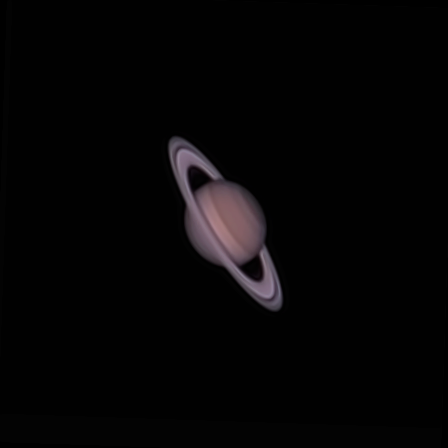
[Photo] Fardin’s photo of Saturn, featured as NASA Exoplanet Watch’s April 2024 “Astrophoto of the Month”
Q3. What first sparked your love of the night sky?
I can’t remember the exact moment. I just know that I’ve always looked up at the stars, ever since I was little. The sky was much darker back then. You know that illusion where the moon or the sun seems to follow you as you walk? I used to wonder why the stars didn’t follow me in the same way. That curiosity grew into an interest not only in the night sky, but also in the daytime sky, astronomy, and aerospace as a whole. The air in Pohang is clean, so I’m excited to see many more stars at night here.
Q4. At Eureka Fest 2023, a science fair in Bangladesh, you presented “Tesla’s City,” a model city combining a solar-tracking system, piezoelectric walkways, and wireless charging for electric vehicles. How did the idea come about?
Our team’s theme was renewable energy, and at first we just wrote down whatever ideas came to mind. Someone suggested building a solar tracker, inspired by my equatorial platform. Just as my platform follows stars, solar panels that follow the sun can improve their efficiency. We didn’t use the same device;we just borrowed the principle of tracking a celestial object.
Another teammate saw a social media post that was going around at the time about Japan turning people’s footsteps into electricity. That gave us the idea of a walkway that generates power when people walk on it. We also came up with a road that could automatically charge electric vehicles as they drive, based on a concept we’d learned in physics class.
Everyone was about to choose just one of those ideas, but I suggested putting them all together. What if we built a whole city with more efficient solar panels, roads that charge electric vehicles, and sidewalks that turn footsteps into electricity?
Q5. You love physics, earned the highest score in A Level Physics in Bangladesh, and have a deep interest in astronomy. Yet you chose mechanical engineering. How do these interests connect, and what kind of engineer do you hope to become?
I really love astronomy. But I don’t want to stop at simply enjoying it. I want to build something that can genuinely contribute to the field, tools like the Hubble Space Telescope or the James Webb Space Telescope that let us capture images of more distant galaxies. Taking pictures of stars and learning the theories aren’t enough to build those things. You need engineering to actually send them into space. After making my equatorial platform, I realized that if I learned engineering properly, I could do far more than pursue a hobby.
POSTECH doesn’t have a separate aerospace engineering department, but I can take relevant courses in mechanical engineering and specialize in aerospace. Mechanical engineering has such a wide range of applications. Whether it’s a submarine underwater, a car on the road, or a spacecraft in orbit, mechanical engineering is involved. So I want to keep my options open as an undergraduate and narrow my focus in graduate school, during my master’s and PhD studies. And someday, I hope to become someone who can represent both Bangladesh and POSTECH on the global stage.
Part 4. And 20 Years From Now
Q1. You’ve only just begun your first semester at POSTECH. What are you most looking forward to?
Fardin | Academically, the first thing I want is to get better at physics. The way we learn here is very different from what I’m used to, so I’m focusing more on physics right now. When I moved from O Levels to A Levels, it was difficult at first, too, but I gradually improved by studying consistently. I want to keep doing that here, making progress one step at a time.
I’ve also joined PSI (POSTECH aeroSpace Initiatives), the aerospace research club in the Department of Mechanical Engineering. So far, most of what I’ve done has been in astronomy, and my only real engineering experience was building the equatorial platform. Now it’s time for me to teach myself programming and CAD. Older students and our GAs (Global Student Advisors, who mentor new international undergraduates) once showed me photos of themselves staying up all night having fun at the beach during break. I want to make memories like that with my friends, too.
Ekaterina | I want to make Korean friends. After all, I’ll be here for at least four years. I’ve already studied Korean for about a year and a half, and I’d like to take a Korean course at PICL (POSTECH Institute of Culture and Language) next semester.
Fardin | Ekaterina is already really good at Korean. When a group of us international students went to Jukdo Market for seafood, she talked with the locals and led us all around.
Ekaterina | “한국어 잘 못해요.” (“My Korean isn’t very good,” she replies modestly in Korean.) Right now, I think settling into campus life should come first, so I’m planning to join clubs next semester. There are so many great options, like photography, dance, and business clubs. I also really love surfing. So far, I’ve only done it in Russia, but once my knee heals, I definitely want to surf here in Pohang.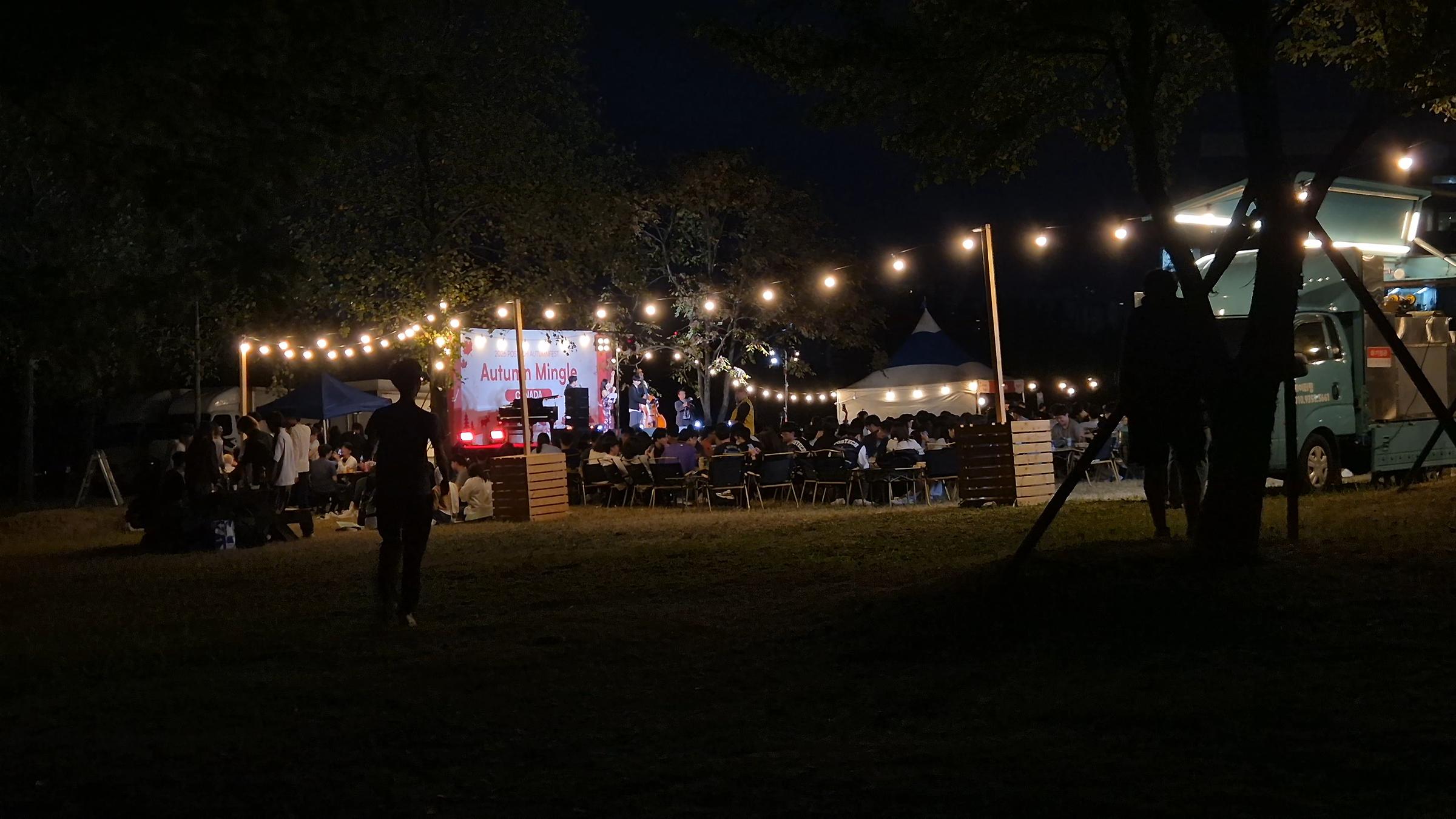
[Photo] 2026 POSTECH AutumnFest, captured by Ekaterina
Q2. POSTECH describes itself as a university dedicated to creating value. What does “creating value” mean to each of you?
Fardin | I can see the value POSTECH creates everywhere. As I mentioned earlier, when a few students wanted to start a club, the university made a new space for them. There’s also so much research infrastructure that students can access, including the PohangAccelerator Laboratory (PAL). Older students have told me that you can join research projects you’re interested in during breaks and that professors welcome you when you come to see them. At many universities, undergraduates have to compete fiercely for lab positions, but that doesn’t seem to be the case here. I can try anything connected to my career goals, and POSTECH will be there to support me. To me, that’s the value of POSTECH.
Ekaterina | For me, creating value is closely connected to research. I contacted a professor even before I was admitted, and I applied for the UGRP. Being able to experience working in a lab while you’re still an undergraduate is incredibly valuable. There are so many opportunities here. You just have to make the most of them.
Q3. Is there anything you would like to say to the POSTECH community?
Ekaterina | First of all, I want to thank POSTECH for accepting me. Being able to study at an excellent university in Korea on a scholarship is an incredible opportunity. I can see the university making an effort to offer more classes in English and help international and Korean students take part in activities together. I’ve attended two other universities in Moscow, where I had to figure everything out on my own. Here, there are so many people I can turn to for help, including the GAs and staff members.
Fardin | I’m really grateful to the admissions team and all the GAs. They’ve never turned us away when we needed help. If I could make one small suggestion, it would be to create a short PDF or video guide for international students. It could cover things that seem minor but are unfamiliar to us, like using the dormitory washing machines or getting a SIM card. For those of us who are still minors, including me, setting up a phone plan is even more complicated. Some students have phones that don’t support eSIMs, while others bought SIM cards that couldn’t be activated with a Residence Card and had to buy another one. The GAs are students themselves, so they can’t always help immediately. A guide like that would let us solve these small problems on our own.
Q4. Applications are now open for POSTECH’s second cohort of international undergraduates. What advice would you give students considering POSTECH or studying in Korea?
Ekaterina | Learning even a little Korean before you arrive will help a lot. My Korean still isn’t that good, but when I was sick recently, I was able to go to a local clinic by myself and explain my symptoms. And definitely check the university website. I manage a Telegram group chat with around 150 applicants, and there are so many questions about things like scholarships. Most of the answers are already on the website.
Fardin | I wish I’d learned some Korean before coming, too. I’d also recommend getting familiar with how Korean students study math and physics. In the British A Level system, a lot of the work involves memorizing formulas and plugging in numbers. Here, it’s completely different. If you can learn even a little about how these subjects are taught in Korean high schools, especially science high schools, it’ll be much easier to keep up.
Ekaterina | There are fewer class hours here than in Moscow, but much more independent study. I’m actually enjoying that right now because I’m genuinely interested in what I’m learning.
Q5. One final question: If you return to POSTECH in 20 years, for its 60th anniversary, what kind of person would you like to have become?
Ekaterina | I’d like to start a deep-tech startup. Right now, my dream is to help people by making prosthetic arms and legs or artificial organs. And of course, I’d like to be rich, too! I hope I’ll be living and working abroad, maybe in Korea or Australia.
Fardin | I want to become a specialist researcher in aerospace and a leader in my field. And when I return to POSTECH, I don’t want younger students to know me only as “an alumnus who came back to visit.” I want them to know me as part of POSTECH’s story, someone who, as one of its first international undergraduates, as a researcher, and as a POSTECHian, accomplished something meaningful for the students who came after me.
What will Ekaterina and Fardin be like when they return to POSTECH 20 years from now? Ekaterina dreams of becoming an entrepreneur who develops technology to help people. Fardin hopes to grow into an aerospace researcher and an alumnus who leaves something behind for the students who follow. Their visions of the future may be different, but they share a desire to create something meaningful through the work they love.
For now, of course, they have only just taken their first steps toward those futures. They are adapting to new ways of learning, making friends, and getting used to unfamiliar parts of everyday life, one at a time. We look forward to seeing how their time at POSTECH unfolds and what stories they will create along the way.